Living the simple life in an Airstream, touring with a dog, and general caravan-related ramblings
Showing posts with label Wild camping. Show all posts
Wednesday, 29 July 2015
Greed and ignorance - killing our simple sites
I try my hardest to avoid all newspapers, even the free ones. However, in a moment of tired weakness on the train last night I flicked through the freebie that was on the seat next to me. One of the main stories was about a lady who nearly died after eating a cupcake in a cafe and going into anaphylactic shock. She was allergic to nuts I believe. The picture of the alleged 'victim' showed her in a graduation gown. In other words, this woman isn't thick.
I do not in any way wish to belittle what happened. This woman nearly lost her life. However, what struck me about this court case is that the blame is being heaped on the cafe that sold the cupcake. Now, this 'victim' knew of her nut allergy, and she had also failed to carry her epipen with her. Yet, because there was no sign on the cake counter that said 'Please ask us about allergens', the lady consumed the cake without knowing it contained traces of nuts. In other words, because there was no sign telling her to ask, she didn't. The lady is a graduate. Did she really need reminding to ask?
By law, the cafe should have had the sign. In other words, the law states that even if you have a dietry allergy that can kill you, it's down to the eating establishment to remind you to ask whether or not that cupcake is going to kill you. In the eyes of the law, the responsibility seems to be a little one-sided.
What has this got to do with caravanning, you ask?
Well, quite a lot, actually.
You see, I'm an advocate of using your caravan, tent, or motor caravan to get away from it all. REALLY get away from it all. It's not for everyone I'll grant you, but to me personally I love being away from club houses, madding crowds, electric hook-ups, and all those other trappings of modern living. Generally I go for four or five months over the summer using small, simple sites (CLs and CSs for those in the know) without electric hook-ups that charge up to £5 per night. I love being self-reliant for my electricity (by solar panel) and for my heat and hot water (LPG, solar shower, woodgas (BioLite) stove, or BioEthanol.) There is a connected feeling of wholesomeness and contentedness about quietly living off-grid for a while.
However, these tiny corners of paradise where I find myself over the summer are dying out at an alarming rate. It is now very difficult in my corner of the woods to find a mains-free CL or CS where you can camp for £5 or under per night. The third CL in three years near to where I am based in Kent has just closed. The three CLs used to charge between £2.50 and £5 per night. All of the owners lament the same reason for closure: Today's 'Compensation Culture', and the prohibitive cost of insuring against it.
Nobody is ever going to make a living out of charging under £5 per night for up to five caravans. However, if you have a spare field with a water supply and enjoy meeting people, it can be a good way to earn what one ex-owner called her 'Gardening Money'. In other words, a little bit of cash to spend on her hobby.
Small sites without facilities are nowhere near as well patronised as their full-facility £15/night cousins, but for folks like me, that is half of the appeal. However, without the volume of 'bed nights' per year, it can be hard for the site owner to cover their existing costs, let alone pay out for expensive insurances. Therefore they take the difficult decision to close, and another simple site bites the dust.
Meanwhile, my Club Magazine tells me of all the small sites that are opening, and generally these are all in the £12-£20 bracket and feature electric hook-ups (EHUs). Installing EHUs is a very costly business, and of course that outlay needs to be recouped as well as the actual energy cost. As the majority of caravanners and motor-caravanners like being hooked in to the mains, these sites can do quite well and the owners can cover their costs, including insurance.
But I don't need a hook-up in the summer. I don't want to have to pay for something I don't need or want.
On the site I am enjoying at the moment, there are rabbit holes. If I twist my ankle falling down one, as far as I am concerned that is my own stupid fault for not looking where I am going. Regrettably, however, there are people amongst us who suffer from the afflictions of greed and ignorance, and are of the opinion that everything that happens to them is someone elses 'fault'. Of course we all need protection from unsafe working practices, dangers to health, and the like. However, responsibilty for their own actions is something that some people seem to shirk, and the rest of us end up paying for it. Right now, some of us are paying for it by losing the few simple sites remaining, and the wonderful lifestyle they allow us to enjoy.
Long live common sense.
Tuesday, 13 January 2015
Camping and Caravanning on the Isle of Harris (and a bit of Barra. And North Uist)
January 2015
Further to the last blog entry, here's a more information-biased entry for those looking at bringing their caravan or motor caravan to the Outer Hebrides.
This entry is a partial update to my 2012 Guide to Caravanning in the Outer Hebrides. I say 'partial' as once you get South of Benbecula there are new sites around that I have yet to properly mention.
Right now, I want to talk about the Isle of Harris. Without doubt, this is my favourite island in the Outer Hebrides. To the North you have the dramatic North Harris Hills, to the West you have gorgeous white sandy beaches, and to the East you have an almost lunar rocky landscape. On top of that, there are three fantastic places to eat and spend an afternoon with a good book and enjoy a friendly chat:
Skoon Art Cafe
Temple Cafe
and a new addition to my favourites list:
Hebscape Gallery Tea Room
Despite Harris being the nicest island, your options for camping and caravanning are limited. There is no such thing as the perfect site here, each site has its good points and bad points, and that's the point of this article.
First off, a bit of background:
The landscape is, as previously mentioned, beautiful. However, that also makes it very difficult to find any naturally flat area to park a caravan or motorhome. Levelling out pitches is a very, VERY costly process. This cost is passed on to the camper. As such, while people expect camping on the islands to be cheaper than on the mainland, the opposite applies. I find it far more expensive on Harris than on the mainland.
Here are the sites, starting near Tarbert (the main ferry port) and heading clockwise around the lower part of the island:
MINCH VIEW
It's been five years since I've been here but I don't think much has changed. It's a small, CL-style site with basic facilities and four EHUs. The big downsides are the boggy ground, and the very tight entrance as you turn off the road. I only just about managed it with a 7ft6 wide single axle.
LICKISTO BLACKHOUSE AND CAMPING
Lots to like here. Friendly hosts, great view, sheltered from the worst of the Westerly winds, and a 'Blackhouse' which is the focus of the campsite in the evening; a place to use the kitchen, meet other campers, and relax. Good facilities.
Downsides? None if you're a tent camper. A couple if you're in a leisure vehicle. The hardstanding area for caravans and motor caravans is the size of a postage stamp. Single axle caravans only, and you'll need a motor mover or need to be able to manhandle your van. Large units (eg tag axle motorhomes) need not apply. There's only the space for 3 vans, no awnings, and any cars will have to be left on the road. No chemical loo disposal (you need to go to Leverburgh to empty the loo) and it's £20 per night for two people in a van.
FLODABAY FARM
A warm welcome from Tony and Sharon, hardstanding, stunning views, chemical loo disposal point, and electric hook-ups.
That's the good stuff. The not-so-good stuff:
£25 per night inc EHU - this is for a site with no shower or toilet facility. Wow.
There are five pitches, not three as on the website. No tents allowed.
Access involves a long drive along the single-track 'Golden Road' down the East Coast of the island - not for the faint-hearted.
The road to the pitches is up a very, VERY sharp incline. 4x4s essential. Motor caravans need plenty of oomph and a robust clutch.
HORGABOST CAMPSITE
This is the wildest, largest, cheapest (but that isn't saying much) and most relaxed campsite in Harris. You can't book, you just turn up.
Well-drained grass pitches, but only a few tent pitches (and a couple of motor caravan pitches 'up top') have a sea view. However, location is what this site is all about - right on the beautiful sandy beach with the stunning backdrop of the North Harris Hills and the island of Taransay rising out of the sea.
Facilities are adequate, based in old shipping containers. Showers are £1 (but you'd only use them if you don't have on board facilities) and there are loos and a washing up area. WCs are wheelchair accessible.
Downsides? It's a flat fee of £14/night for a caravan/motorhome. That's not great if, like me, you're on your own. There are no EHUs, and nowhere to empty the loo (back to Leverburgh...). The site is littered with seasonal caravans, and as there is no on-site staff presence, there is nobody to keep unruly campers in check late at night. I hasten to add that I have NEVER been disturbed by anti-social behaviour here. Facing North West, the site can get battered by the wind forcing tent campers to scuttle over to Lickisto.
WILD CAMPING
There is a great scheme that has been introduced by the West Harris Trust. You're welcome to Wild Camp in certain spots, but are expected to make a super-reasonable contribution of £5 per night for the privilege. This is a great idea.
The downsides are: The areas are just off the road (i.e. laybys) so there isn't much room, and everything (fresh water, waste water, rubbish) needs to be carried in and carried out. OK for a night stop, not a realistic alternative to a camp site for longer stays.
So there you have the current (2014/15) camping situation on the island of Harris.
I conclude this entry with two alternatives if the actual campsite, or value for money, are of high importance to you.
The BEST CAMPSITE in the Outer Hebrides in my humble opinion is Moorcroft Campsite, in the South West corner of North Uist. Great views, super facilities, friendly owners, easy access, reasonable pricing... THIS is the campsite to come to if you have a large (twin axle) or a wide (8ft) caravan as the road from Lochmaddy ferry terminal is almost completely two-way. You can leave the 'van here and explore seven causeway-linked islands unencumbered. Kilbride campsite down in South Uist is also a nice, clean, neatly-presented site, but is less central.
The BEST VALUE campsite in the Outer Hebrides is Scurrival (Scuribhal) campsite at Eoligarry at the North East tip of Barra. The friendly owner Angus-John charges by the person, not by the unit. Therefore in 2014 I ended up paying £5 per night which included brilliant facilities - big en-suite shower rooms and a kitchen with two washing up sinks. No laundry facilities though (2014).
Fantastic views, and EHUs at £4/n if you want them. I stayed six nights, and was charged the same as I was for one night at Flodabay Farm. But, to be fair, no expensive quarrying and levelling has been necessary at Scurrival.
So there you have it... I hope that's been of some use to you. You have the info... now all you need to do is decide when you're coming!
Friday, 28 November 2014
Road to the Islands Part 6: Kylesku Bridge, Clachtoll, and Return of the Mojo
May 2014
It doesn't take a Genius to work out that I am a Gael at heart. I don't understand why (my family is from Kent for at least the last 150 years), but there is something I find so attractive about the Highlands and Islands of Scotland. I had enjoyed the East Coast, but one minor thing was bugging me. I'd driven up from Dover and, while I discovered a truly beautiful stretch of coastline, I didn't really find anything that I could not have found closer to home. East Kent, Suffolk, Norfolk, East Lincolnshire, East Yorkshire, and especially Northumberland... they are all so beautiful in that 'Big Sky' East Coast kind of a way. With so much East Coast Gorgeousness close to hand, there would be nothing really to take me back to the North East of Scotland now that I have enjoyed its cultural attractions.
The West Coast however... oh my goodness me, that is something else. Wild, desolate, rugged, and beautiful landscapes that are found in no other parts of the UK with a language and a culture to match. I can't get enough of it, so much so that I am now doing a University Course in Scottish Gaelic, aiming eventually for my first ever degree.
So... despite the fact I had remained as open-minded as possible, and I really had enjoyed my time on the East Coast and in the fantastic Naver/Nabheir Glen, I cannot deny that turning the corner at Durness (and leaving behind the rubbish experience at Cape Wrath) was a 'turning of the corner' in more ways than one. The weather went from OK to fantastic. The scenery went from fantastic to stunning. My spirits lifted beyond measure. Swooping through dramatic glens on deserted roads with my Airstream behind, I actually allowed myself to relax and feel good again. It was an uplifting afternoon.
Being the adventurous sort that I am (that's another way of saying 'disorganised' and 'running by the seat of my pants') I had no plans for the evening. I took a few side roads to see if they'd lead to nice places to camp for the night.
They didn't.
Twice I ended up having to unhitch the Airstream, spin it around, and head back. Given the to-do with the Cape Wrath experience, that made it three times in a day I had to turn the 'van around. This, my friends, is why I love my single-axle caravan, and why, being a single caravanner, I bless my motor mover. It's not that I cannot reverse my caravan, it's that quite often I'll end up with nowhere to reverse it into.
That night I finally ended up in a layby off the A894 at Kylesku, next to the bridge and just out of sight of the road which made me feel a little less conspicuous. Unbeknown to me at first, it turned out to be an interesting place to stop.
Like 99% of motorists I would have hooned over the bridge without thinking twice about it. Now, having stopped to breath and to rest, I had the time to examine the interpretation boards and explore the area.
The curved box girder bridge looked impressive from my makeshift pitch. Before the bridge was built, the A894 was broken by a ferry crossing at this point, and that ferry only ran in daylight. People rushing for the last ferry caused accidents, and many faced an unexpected night in Kylesku or a long, long diversion via Altnaharra.
You'd think that all changed sometime around 1964, wouldn't you? But no, this was the state of affairs until 1984, a mere 30 years ago. Fascinating.
Next day I set off with Clachtoll Beach Campsite in mind. It wasn't too far away, but my dear friend M had told me to take the coast road around the peninsula to Lochinver. What M had obviously forgotten was this sign as you turn off the A894:
Hey ho. These signs are there for a reason. I carried on along the A road taking the long way 'round, but nevertheless was still rewarded with an AMAZING drive. This, dear reader, is what caravanning is about - the joy of the journey and discovery:
My welcome at Clachtoll was warm and friendly, always super-important to a solo traveller. It was a lovely site for a night stop where I could unwind and catch up on work for a bit. Being anxious to get to the islands I only stayed for one night, but I enjoyed the area and the site so much I'm already planning my return visit. Next time I'll definitely be taking the motorbike as well!
It doesn't take a Genius to work out that I am a Gael at heart. I don't understand why (my family is from Kent for at least the last 150 years), but there is something I find so attractive about the Highlands and Islands of Scotland. I had enjoyed the East Coast, but one minor thing was bugging me. I'd driven up from Dover and, while I discovered a truly beautiful stretch of coastline, I didn't really find anything that I could not have found closer to home. East Kent, Suffolk, Norfolk, East Lincolnshire, East Yorkshire, and especially Northumberland... they are all so beautiful in that 'Big Sky' East Coast kind of a way. With so much East Coast Gorgeousness close to hand, there would be nothing really to take me back to the North East of Scotland now that I have enjoyed its cultural attractions.
The West Coast however... oh my goodness me, that is something else. Wild, desolate, rugged, and beautiful landscapes that are found in no other parts of the UK with a language and a culture to match. I can't get enough of it, so much so that I am now doing a University Course in Scottish Gaelic, aiming eventually for my first ever degree.
So... despite the fact I had remained as open-minded as possible, and I really had enjoyed my time on the East Coast and in the fantastic Naver/Nabheir Glen, I cannot deny that turning the corner at Durness (and leaving behind the rubbish experience at Cape Wrath) was a 'turning of the corner' in more ways than one. The weather went from OK to fantastic. The scenery went from fantastic to stunning. My spirits lifted beyond measure. Swooping through dramatic glens on deserted roads with my Airstream behind, I actually allowed myself to relax and feel good again. It was an uplifting afternoon.
Being the adventurous sort that I am (that's another way of saying 'disorganised' and 'running by the seat of my pants') I had no plans for the evening. I took a few side roads to see if they'd lead to nice places to camp for the night.
They didn't.
Twice I ended up having to unhitch the Airstream, spin it around, and head back. Given the to-do with the Cape Wrath experience, that made it three times in a day I had to turn the 'van around. This, my friends, is why I love my single-axle caravan, and why, being a single caravanner, I bless my motor mover. It's not that I cannot reverse my caravan, it's that quite often I'll end up with nowhere to reverse it into.
That night I finally ended up in a layby off the A894 at Kylesku, next to the bridge and just out of sight of the road which made me feel a little less conspicuous. Unbeknown to me at first, it turned out to be an interesting place to stop.
Like 99% of motorists I would have hooned over the bridge without thinking twice about it. Now, having stopped to breath and to rest, I had the time to examine the interpretation boards and explore the area.
The curved box girder bridge looked impressive from my makeshift pitch. Before the bridge was built, the A894 was broken by a ferry crossing at this point, and that ferry only ran in daylight. People rushing for the last ferry caused accidents, and many faced an unexpected night in Kylesku or a long, long diversion via Altnaharra.
You'd think that all changed sometime around 1964, wouldn't you? But no, this was the state of affairs until 1984, a mere 30 years ago. Fascinating.
Next day I set off with Clachtoll Beach Campsite in mind. It wasn't too far away, but my dear friend M had told me to take the coast road around the peninsula to Lochinver. What M had obviously forgotten was this sign as you turn off the A894:
Hey ho. These signs are there for a reason. I carried on along the A road taking the long way 'round, but nevertheless was still rewarded with an AMAZING drive. This, dear reader, is what caravanning is about - the joy of the journey and discovery:
My welcome at Clachtoll was warm and friendly, always super-important to a solo traveller. It was a lovely site for a night stop where I could unwind and catch up on work for a bit. Being anxious to get to the islands I only stayed for one night, but I enjoyed the area and the site so much I'm already planning my return visit. Next time I'll definitely be taking the motorbike as well!
Tuesday, 24 September 2013
Hebrides Summer 2013 - Part 2: Relax, Recharge, Refresh, and Return of the Mojo
Where were we? Ah yes, heading to a Caravan Club CL in South Uist.
'Oh, hello Mister
Gàidhlig!' smiled Catriona, owner of the CL after I rang at the door. I guess that my Gaelic fleece is none too subtle:
'Tha Gàidhlig agaibh?'
Tha
'Tha mi ag ionnsachadh
Gàidhlig, comhla ri Sabhal
-->Mòr Ostaig, ach tha Sassainach a th' annam'
'Glè mhath!'
Almost every Gaelic conversation started off like this during my stay. This would be followed by something I'd fail to understand after which we'd switch to English, but it was a start. I liked Catriona very much, and immediately felt very welcome and relaxed. Phew!
It's all very nice travelling around here, there, and everywhere, but sometimes you just want to STOP. You want to plug in to the mains and keep the caravan dry and warm inside. You're fed up with cleaning the sand off the floor five times a day. You don't have the energy to chop kindling or crank up the woodgas stove outside. You just want to get the jobs done that are weighing you down, clean up, and chill out without having to worry about the weather or where to go tomorrow.
That's exactly what I did. The Airstream was washed and waxed. The motorbike unloaded, cleaned, oiled, and taken for a spin. I slept. And Dougal? Dougal made new friends:
Dougal's other good friend, Paddy, lives at Askernish Golf Course, just a few miles away from where we were. So of course off we went to go find Paddy, who, like Dougal, has matured somewhat and was less playful than he's been before. However, he still joined us for a good half hour, and you could tell that he and Dougal remember each other:
Just down the road from the CL is an abandoned church. I liked the building very much, and in my head sketched up a 'grand design' for a one-bedroomed house with a huge galleried ceiling in the living room and the bedroom on a mezzanine:
Lovely building, but wrong location. I like the Uists very much, and it's the island chain I visit to wind down and de-stress, but once relaxed I prefer Harris where there's a little bit more going on.
There was only one other thing to do during my short stay at Catriona's CL.
You may have noticed that now and again I wild camp on the islands. As well as applying common sense (ie one, maximum two nights in a spot, stay out of the way, leave TIDIER than you find etc etc) I have a little rule. That rule is to spend what I would have spent on site fees in the local economy. Therefore I HAD TO spend £20 on food and cake in the sweet wee cafe in the Lochboisdale Post Office to make up for the two nights wild camping. Tough, but I managed.
I'd have stayed at 'Taigh Chatriona' for three nights but I needed to head to North Uist. My friend Mat was coming over to join me for a few days, and was sailing to Lochmaddy. Off I headed to Moorcroft Campsite on the South West Corner of North Uist. The lovely owners remembered me and made me feel super-welcome again. And, I'm pleased to say, indulged my Gaelic a little too. 'We could tell you were bursting to have a go!' laughed Catriona. (Please note, not all Hebridean site owners are called Catriona, but it does seem to be a theme.)
Slight panic set in when I realised that this night at Moorcroft would be my last for at least two weeks with access to a washing machine. Despite the gloomy wet weather being anything but 'drying weather', it was time to bite the bullet, hang the expense, and get everything clean and dry using the machine and drier. That night was an expensive one.
Clothes admin, and my inability to get up in the morning, meant leaving the Airstream at Moorcroft while I went to met Mat's ferry at Lochboisdale:
He'd had a super-long drive up from Dorset so was happy to chill for the rest of the day. Off we went to my favourite wild camping spot for the night.
Well, MY 'fair weather blessing' may have worn off when visiting the islands, but I now believe that I simply loaned it to Mat this year. After he arrived, the mist lifted and the sun came out. 'My' spot at my favourite place was free, and life was good once again.
Washed up on the beach where we were was an old wooden pallet, ideal for a bit of fire pit action that evening. However, the blade in my bowsaw was becoming less than sharp. Time to head to the DIY shop on South Uist, just over the causeway from Benbecula.
In the shop they had blades for larger bowsaws, and only the complete saw unit, handle and all, in the size I wanted. The kind owner therefore removed the blade from the complete saw to sell to me for £3, and ordered himself a new blade to replace the one he'd borrowed from the complete saw on sale.
Now, can you see them doing that in B&Q?
With the sun shining, the Hebridean folks being their usual friendly, helpful, down-to-earth selves, and with a friend in tow to show off 'my' special place, my spirits lifted immeasurably. Maybe the fact I'd slept loads and had adjusted my adrenaline levels from 'London' to 'Hebrides' also helped.
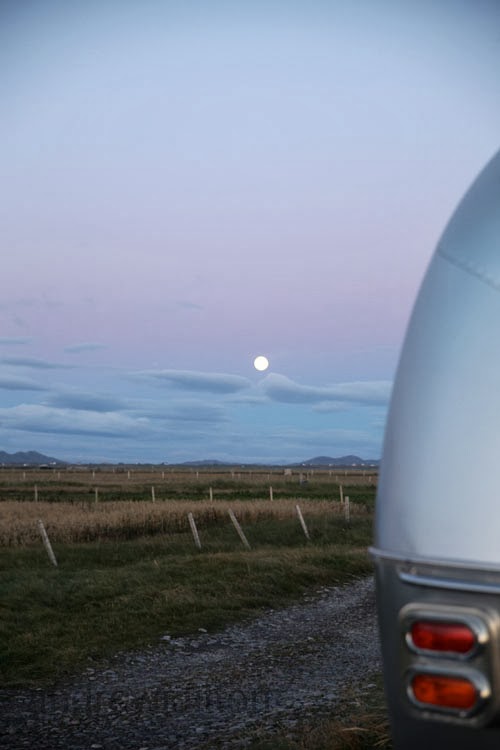
That evening, Mat and I enjoyed an al-fresco meal cooked on the Dometic Origo stove, followed by an evening just chilling out around a roaring fire, in awe of the amazing sunset on one side followed by an equally spectacular moon rising on the other side.
That was finally it. This was the Hebrides that I know and love. The light is something else. My severed roots were once again back in Hebridean soil and growing again. I knew that evening that my earlier apathy about coming here was misplaced. If only for this one evening, the whole journey from Kent was more than worth it. Nowhere else in the world makes me feel as happy and as grounded as I do here. Nowhere else comes close. The Outer Hebrides is the most amazing place in the world. You either get it, or you don't.
Labels:
Gaidhlig,
HeatPal,
Hebrides,
Origo,
South Uist,
Wild camping
Friday, 20 September 2013
Hebrides Summer 2013 - Part 1: South Uist & Eriskay - Kitesurfing and Sandblasting
After a good nights sleep it was a slow morning. The VW Camper had gone so I moved back to 'my' spot, simply because I could.
Where I camp at this spot, there are miles of beautiful coastline. The Airstream was pitched well away from the road. Yet, for some inexplicable reason, people always seem to want to park right up next to me. What's all that about?
Spot the red car:
Not only had I appeared to lose my Hebridean mojo, I seemed to have lost my kitesurfing mojo too. Here we were in the second week in August and I had not been out for one single session. Now there was no excuse. The wind was a perfect 15mph cross-onshore and once the tide had ebbed sufficiently there was enough beach to rig up on.
A good session was had, and just like riding a bike, kitesurfing is something that you don't seem to forget once you've learned it.
One of the great things about getting away to somewhere as wild and as remote as the Outer Hebrides is that it really reminds us as Human Beings of our place in relation to Mother Nature. We cannot, for all our arrogance, control the weather or its effects. All we can do is try to predict what will happen (thank you Met Office) and take action if necessary.
The weather that night was due to be wild and windy. Already the Airstream was covered in sand and salt spray from the sea. Salt spray and aluminium a happy combination do not make. One of the outstanding jobs I never 'quite' got around to before leaving was to wax the trailer. It still needed doing, and now more desperately than ever.
As such I upped steadies and headed off to the CalMac ferry terminal at Eriskay. I knew here that I would be sheltered from the worst of the wind and be able to get a good nights sleep. I was, after all, absolutely shattered both mentally and physically. I also know that at the ferry terminal is water tap and a chemical loo emptying point. Given the eye-watering amount of money that I waft in CalMac's general direction every year, I have no qualms about helping myself to a few litres of fresh water. I managed to get the salt washed off the rig, but wet weather and depleted energy levels prevented the necessary waxing.
A new site has opened on South Uist near the causeway to Eriskay called Kilbride Campsite. I felt it my duty to stay there and check it out. More details in the forthcoming Guide to the Outer Hebrides, stay tuned.
The wind still blew a hooley, which meant a cheeky kitesurf off the tiny beach opposite Kilbride with a 7m kite. The phrase 'survival session' springs to mind.
By now I was truly knackered, still both physically and mentally. The necessary job of waxing the Airstream was not going away and my mind filled with worries about corrosion creeping from every rivet. As nice as Kilbride was, it was a wee bit exposed for the wind direction. However, around the corner at South Boisdale, a new Caravan Club CL had opened. I scouted over for a look. Pretty it wasn't, but the main attraction was that the large farm building that spoiled the view also afforded protection from the wind. Gravel hardstanding meant that I would be able to clean up the Airstream on the inside too without continuously treading in sand. Time to move on.
Labels:
Eriskay,
Hebrides,
Kitesurfing,
South Uist,
Wild camping
Thursday, 25 July 2013
Dometic Origo HeatPal, Gaslow Refillable cylinders, and off-grid caravanning

I make no secret of the fact that to me, caravanning is all about travel and adventure. It's the perfect way to live simply and reconnect with nature. As such, in the summer months I prefer not to be tied to an orange mains lead, but to go where I want to go regardless of what facilities are laid on. Or not.
With this freedom comes flexibility, as there is less need to book mains-free pitches in advance.
A solar panel keeps the batteries topped up, but a consequence of unplugging from the mains is a greater reliance and higher consumption of LPG (bottled gas).
For this reason, I have used the Gaslow refillable system for almost seven years now. For two years it was in use on my Sterling Eccles, where I had an 11kg refillable cylinder alongside a 13kg exchangeable Calor. This arrangement offered the best of both worlds, and my Renault Trafic tow vehicle could handle the noseweight. Whenever I was out and about, I'd simply pull into a service station and top up the LPG at a pump. Yet if I was stationary for a while and the refillable ran out, I could switch to Calor which, while more expensive, offered the convenience of not having to take the caravan off pitch to be filled up.
When I bought my Airstream in 2008, the Gaslow refillable system was not at the time available from Airstream Europe. The new company was still in its early days, and nothing was put on the options list until it was proven. Fortunately my nagging brought the two companies together and I took delivery of the first European Airstream to be fitted with the Gaslow system. Back in the day, having 2 x 6kg cylinders was the only realistic option given the restrictive size of the gas locker, although I understand that now the gas locker may be modified to take larger cylinders. If that were the case back then I would have replicated the set-up I had in the Sterling with just one 11kg cylinder.
However, you CAN disconnect one of the Gaslow cylinders and simply attach a propane cylinder instead. This may be an option for long-term stationary winter use.
Me, I like to travel as unencumbered as possible. Carting a 13kg LPG cylinder about safely and constantly upright is something I could do without. Therefore, at times I may run low on gas...
...which is exactly what happened this week. I couldn't understand why my consumption had been so high when the weather had been so hot. I consulted my technical guru, Pete Bull of Little Tin Hut Airstream Servicing, who pointed the finger at the fridge quoting some very precise consumption figures. In hot weather, the fridge can burn an alarming amount of gas in order to keep cool. I guess that makes sense. But it didn't help me in my critically low gas situation. I needed to preserve as much LPG as possible in order to keep the fridge running until I got to a filling station.
From the back of a cupboard I wheeled out my Dometic Origo 5100 Heat Pal. I acquired this to try out in my January off-grid trip to the Outer Hebrides, and it was an absolute lifesaver. Here it was coming to the rescue again.
The Heat Pal burns 'Denatured alcohol', which in the UK is most easily available as methylated spirit. It produces about 1500w of heat, so in addition to being used as a cooker, you can use it as a space heater too.
In July 2013 the law regarding the production and use of methylated spirit changed, to introduce conformity in the composition and the amount of 'denaturing' carried out in its production. As such, Dometic now recommends users to burn Bio Ethanol. I will be procuring some and giving it a go in the future.
When burning any open flame in an enclosed space like a caravan or tent you MUST have sufficient ventilation. Open flames and smouldering coals produce carbon monoxide, which can (and does) kill in a confined area.
When using the Origo as a space heater in the Outer Hebrides, it kept my 17ft long trailer comfortably warm during the day even with two windows cranked open for ventilation. For cooking, it is quite a 'slow' heat which takes about 15 minutes to boil a litre of water. A woodgas stove such as the BioLite will cook much quicker, but these can ONLY be used outside, and you have the faff of trying to get the thing lit and, in my case, chopping up the kindling to use as fuel. The Dometic Origo wins hands down on sheer convenience. Simply fill up with fuel, light with a single match, and off you go. And, with adequate ventilation, you can use it inside.
It's an expensive piece of kit retailing at about £150. Bio Ethanol can be bought fairly cheaply online at about £6 per litre. Compare that to the £3.60 I paid for 250ml of meths from Wickes.
Either way, having lived with the Origo for over six months in the snow of winter and the heatwave of summer, I now consider this to be an essential piece of kit to any off-grid caravanner.
Yesterday, we packed up and moved on and finally filled up with LPG.
The cost of filling both 6kg bottles? £13.57.
The cost of 2 x 6kg Calor Gas refills? £42-44.00
The cost of installing a 2 x 6kg Gaslow system stands at between £400 and £500.
I reckon on getting through 20 single cylinders a year at an average saving of £15 per refill. That's £300 per year. So far, that's about £1200 for the four years I have had this system, not to mention the money saved by being able to use £4 per night CLs instead of £20 per night EHU pitches on sites.
In other words, even if you only do 10 cylinder refills a year, the system will pay for itself in about three years, and thereafter you'll save about £150 per year. Not to mention the freedom to go caravanning where you like, when you like. THAT is priceless.
Labels:
Airstream,
Calor,
Dometic,
gas,
Gaslow,
Gaslow refillable,
Harris,
Heat Pal,
HeatPal,
LPG,
Origo,
Wild camping,
woodgas stove
Subscribe to:
Posts (Atom)